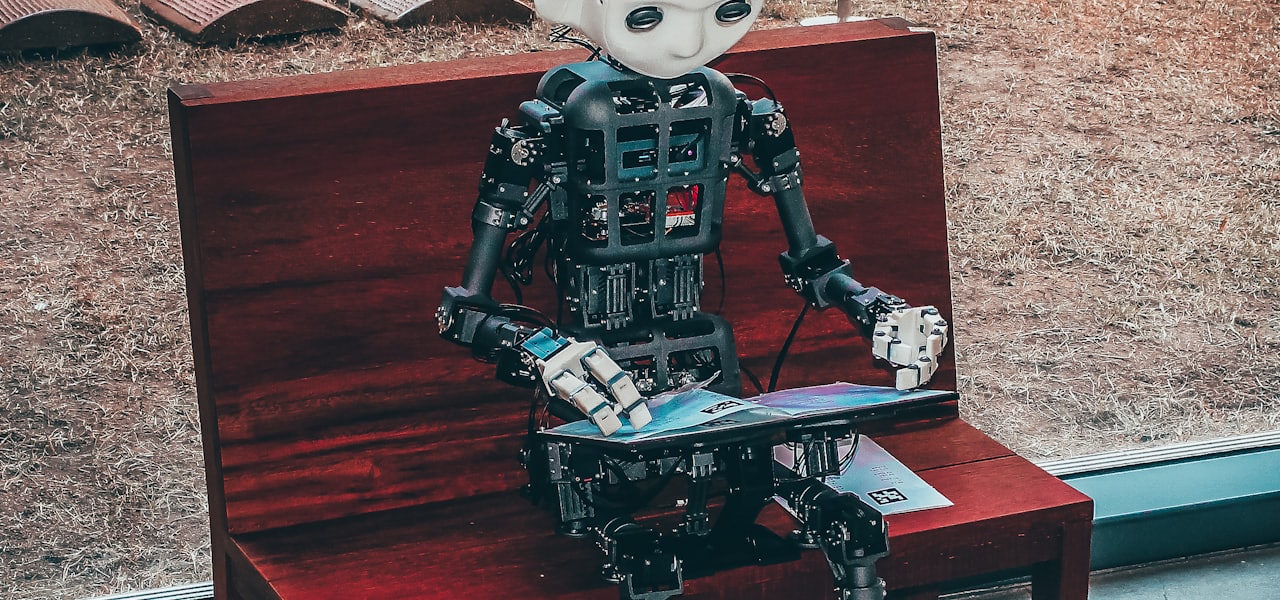
Eugene Goostman is a chatbot that some regard as having passed the Turing test, a test of a computer's ability to communicate indistinguishably from a human. Developed in Saint Petersburg in 2001 by a group of three programmers, the Russian-born Vladimir Veselov, Ukrainian-born Eugene Demchenko, and Russian-born Sergey Ulasen, Goostman is portrayed as a 13-year-old Ukrainian boy—characteristics that are intended to induce forgiveness in those with whom it interacts for its grammatical errors and lack of general knowledge. The Goostman bot has competed in a number of Turing test contests since its creation, and finished second in the 2005 and 2008 Loebner Prize contest. In June 2012, at an event marking what would have been the 100th birthday of the test's author, Alan Turing, Goostman won a competition promoted as the largest-ever Turing test contest, in which it successfully convinced 29% of its judges that it was human. On 7 June 2014, at a contest marking the 60th anniversary of Turing's death, 33% of the event's judges thought that Goostman was human; the event's organiser Kevin Warwick considered it to have passed Turing's test as a result, per Turing's prediction in his 1950 paper "Computing Machinery and Intelligence", that by the year 2000, machines would be capable of fooling 30% of human judges after five minutes of questioning. The validity and relevance of the announcement of Goostman's pass was questioned by critics, who noted the exaggeration of the achievement by Warwick, the bot's use of personality quirks and humour in an attempt to misdirect users from its non-human tendencies and lack of real intelligence, along with "passes" achieved by other chatbots at similar events. == Personality == Eugene Goostman is portrayed as being a 13-year-old boy from Odesa, Ukraine, who has a pet guinea pig and a father who is a gynaecologist. Veselov stated that Goostman was designed to be a "character with a believable personality". The choice of age was intentional, as, in Veselov's opinion, a thirteen-year-old is "not too old to know everything and not too young to know nothing". Goostman's young age also induces people who "converse" with him to forgive minor grammatical errors in his responses. In 2014, work was made on improving the bot's "dialog controller", allowing Goostman to output more human-like dialogue. A conversation between Scott Aaronson and Eugene Goostman ran as follows: == Competitions == Eugene Goostman has competed in a number of Turing test competitions, including the Loebner Prize contest; it finished joint second in the Loebner test in 2001, and came second to Jabberwacky in 2005 and to Elbot in 2008. On 23 June 2012, Goostman won a Turing test competition at Bletchley Park in Milton Keynes, held to mark the centenary of its namesake, Alan Turing. The competition, which featured five bots, twenty-five hidden humans, and thirty judges, was considered to be the largest-ever Turing test contest by its organizers. After a series of five-minute-long text conversations, 29% of the judges were convinced that the bot was an actual human. === 2014 "pass" === On 7 June 2014, in a Turing test competition at the Royal Society, organised by Kevin Warwick of the University of Reading to mark the 60th anniversary of Turing's death, Goostman won after 33% of the judges were convinced that the bot was human. 30 judges took part in the event, which included Lord Sharkey, a sponsor of Turing's posthumous pardon, artificial intelligence Professor Aaron Sloman, Fellow of the Royal Society Mark Pagel and Red Dwarf actor Robert Llewellyn. Each judge partook in a textual conversation with each of the five bots; at the same time, they also conversed with a human. In all, a total of 300 conversations were conducted. In Warwick's view, this made Goostman the first machine to pass a Turing test. In a press release, he added that: Some will claim that the Test has already been passed. The words Turing Test have been applied to similar competitions around the world. However this event involved more simultaneous comparison tests than ever before, was independently verified and, crucially, the conversations were unrestricted. A true Turing Test does not set the questions or topics prior to the conversations. In his 1950 paper "Computing Machinery and Intelligence", Turing predicted that by the year 2000, computer programs would be sufficiently advanced that the average interrogator would, after five minutes of questioning, "not have more than 70 per cent chance" of correctly guessing whether they were speaking to a human or a machine. Although Turing phrased this as a prediction rather than a "threshold for intelligence", commentators believe that Warwick had chosen to interpret it as meaning that if 30% of interrogators were fooled, the software had "passed the Turing test". ==== Reactions ==== Warwick's claim that Eugene Goostman was the first ever chatbot to pass a Turing test was met with scepticism; critics acknowledged similar "passes" made in the past by other chatbots under the 30% criteria, including PC Therapist in 1991 (which tricked 5 of 10 judges, 50%), and at the Techniche festival in 2011, where a modified version of Cleverbot tricked 59.3% of 1334 votes (which included the 30 judges, along with an audience). Cleverbot's developer, Rollo Carpenter, argued that Turing tests can only prove that a machine can "imitate" intelligence rather than show actual intelligence. Gary Marcus was critical of Warwick's claims, arguing that Goostman's "success" was only the result of a "cleverly-coded piece of software", going on to say that "it's easy to see how an untrained judge might mistake wit for reality, but once you have an understanding of how this sort of system works, the constant misdirection and deflection becomes obvious, even irritating. The illusion, in other words, is fleeting." While acknowledging IBM's Deep Blue and Watson projects—single-purpose computer systems meant for playing chess and the quiz show Jeopardy! respectively—as examples of computer systems that show a degree of intelligence in their specialised field, he further argued that they were not an equivalent to a computer system that shows "broad" intelligence, and could—for example, watch a television programme and answer questions on its content. Marcus stated that "no existing combination of hardware and software can learn completely new things at will the way a clever child can." However, he still believed that there were potential uses for technology such as that of Goostman, specifically suggesting the creation of "believable", interactive video game characters. Imperial College London professor Murray Shanahan questioned the validity and scientific basis of the test, stating that it was "completely misplaced, and it devalues real AI research. It makes it seem like science fiction AI is nearly here, when in fact it's not and it's incredibly difficult." Mike Masnick, editor of the blog Techdirt, was also skeptical, questioning publicity blunders such as the five chatbots being referred to in press releases as "supercomputers", and saying that "creating a chatbot that can fool humans is not really the same thing as creating artificial intelligence."
Report generator
A report generator is a computer program whose purpose is to take data from a source such as a database, XML stream or a spreadsheet, and use it to produce a document in a format which satisfies a particular human readership. Report generation functionality is almost always present in database systems, where the source of the data is the database itself. It can also be argued that report generation is part of the purpose of a spreadsheet. Standalone report generators may work with multiple data sources and export reports to different document formats. Information systems theory specifies that information delivered to a target human reader must be timely, accurate and relevant. Report generation software targets the final requirement by making sure that the information delivered is presented in the way most readily understood by the target reader. == History == An early report writer was part of NOMAD developed in the 1970s. The evolution of reporting software has a rich history dating back to the mid-20th century, driven by the increasing need for businesses to efficiently analyze and present data. Initially, manual extraction and tabulation were commonplace, but the advent of computers in the 1960s marked a transformative phase with the emergence of basic reporting tools. The 1980s saw the widespread adoption of database management systems, laying the groundwork for more sophisticated reporting capabilities. Notable dedicated reporting software, such as Crystal Reports and BusinessObjects, gained prominence in the 1990s amidst the growing demand for business intelligence. The 21st century witnessed a paradigm shift towards web-based reporting solutions and the rise of self-service BI tools, empowering users to create reports independently. Presently, reporting software continues to evolve with a focus on data visualization, integration of artificial intelligence, and the imperative for real-time analytics in decision-making.
Storyful
Storyful (stylized as storyful.) is a social media intelligence company headquartered in Dublin, Ireland that is a subsidiary of News Corp, offering services such as social news monitoring, video licensing, and reputation risk management tools for corporate clients. The startup was launched as the first social media newswire, a content aggregator, verifying news sources and online content in Dublin in 2010 by Mark Little, a former journalist with RTÉ News. Storyful was acquired by News Corp in 2013 for USD$25 million. == Background == Mark Little, who had worked as a television journalist for RTÉ One, founded startup Storyful in Dublin, Ireland, in 2010, as a service that "verified news sources and online content". According to Nieman Lab, Storyful had a reputation for content aggregation as a social news agency—finding, verifying, distributing, licensing, and commercializing user-generated content, social media and online content from social networking services, including videos about stories in the news, such as the Syrian Civil War, Arab Spring protests, as well as "smaller viral moments". Storyful aimed to provide authority through its verification and monitoring tools while providing authenticity through user-generated content. On 20 December 2013 News Corp purchased Storyful for US$25 million and opened a New York office in the same building as Fox News' main studios. Little left Storyful in 2015 and Gavin Sheridan, Storyful's director of innovation left in 2014. News Corp CEO Robert Thomson said that through Storyful, News Corp would "define the opportunities that the digital landscape presents, rather than simply adapt to them." After the acquisition, the company expanded its service to include "commercial and creative work". After Murdoch acquired the company, from 2014 through to February 2018, losses "swelled", requiring a series of cash injections from News Corp. During that time the company expanded aggressively globally with a staff of about 200 worldwide up from about 30 in 2014. According to The Guardian, in 2016, journalists were encouraged by Storyful to use the social media monitoring software called Verify developed by Storyful. By installing Verify's web browser extension on their computers, Verify would inform the journalists when social media content had been "verified and cleared". The Guardian revealed that through the Verify plugin, dozens of staff in four offices had access to the journalists browsing activity without them knowing. This data allowed Storyful to actively monitor its own clients' activities on social media and to "turn it into an internal feed" at Storyful that "updates in real time". In November 2018, when a video circulated by Infowars' Paul Joseph Watson appeared to prove that CNN's Jim Acosta's contact with a White House intern was a physical blow, Storyful was able to prove that the 15-second-long clip had been doctored. According to a 21 January 2019 article in CNN Business, Rob McDonagh, the editor of Storyful's U.S. news team, had proven that one of the viral videos that served as catalysts in the January 2019 Lincoln Memorial confrontation at 18 January 2019 Indigenous Peoples March, was posted by a suspicious account, under the handle @2020fight. McDonagh's team validates videos and posts before adding them to their "digest", distinguishing true stories from those that are not. Storyful attempts to validate each post or video before including it in its digest. McDonagh reviewed previous content from @2020fight's account, and found it suspicious because it had a high follower count, a "highly polarized and yet inconsistent political messaging", an "unusually high rate of tweets", and "the use of someone else's image in the profile photo." reporter Donie O'Sullivan said that the @2020fight video that had been posted on 18 January, which had 2.5 million views by 22 January, was the one that "helped frame the news cycle". Currently the website offers a service by which video can be commercially brokered. == Services == Services include a newswire service—one of their "core pillars"—and social news monitoring. By February 2018, Storyful was developing "risk and reputation monitoring" services through which they would source and verify social news, fact-checking it and contextualising it for corporate clients. They were "developing tech tools" to "explore obscure or closed networks" for their intelligence team. can use to explore obscure or closed networks. They "track deviations in social conversations around brands and organisations and catch potential risks before they blow up. Like an alerts system." The company "released a re-booted version of its Newswire platform in 2018. According to FORA, Storyful was developing new tools to combat fake news online. == Clients == When Storyful was acquired by News Corp in 2013, the company already had the Wall Street Journal, the BBC, New York Times, YouTube, ITN and Channel 4 News as clients. By 2018 their clients included CNN, ABC News and Fox News, The New York Times, the Washington Post, in the United States, the Australian Broadcasting Corporation and all of News Corp’s own publications. Most of their "reputation-conscious corporate customers" clients prefer to not be named.
Vans challenge
The Vans challenge is a viral internet challenge that began in March 2019 where people show their Vans shoes landing right-side up after tossing them in the air. The viral sensation reportedly started after a Twitter user shared a video of the occurrence, which was captioned: “Did you know it doesn’t matter how you throw your Vans they will land facing up.” Since then, multiple people on social media posted similar videos of them throwing their Vans in the air and landing right-side up, along with Crocs, UGG boots, and other popular shoes. This theory proved false, as these shoes have not always landed facing up after tossing them.
Social media use in the fashion industry
Social media in the fashion industry refers to the use of social media platforms by fashion designers and users to promote and participate in trends. Over the past several decades, the development of social media has increased along with its usage by consumers. The COVID-19 pandemic was a sharp turn of reliance on the virtual sphere for the industry and consumers alike. Social media has created new channels of advertising for fashion houses to reach their target markets. Since its surge in 2009, luxury fashion brands have used social media to build interactions between the brand and its customers to increase awareness and engagement. The emergence of influencers on social media has created a new way of advertising and maintaining customer relationships in the fashion industry. Numerous social media platforms are used to promote fashion trends, with Instagram and TikTok being the most popular among Generation Y and Z. The overall impact of social media in the fashion industry included the creation of online communities, direct communication between industry leaders and consumers, and criticized ideals that are promoted by the industry through social media. == Background == In 2003, at the beginning of social media development, MySpace was founded as a “social networking service.” It allowed people to create a profile, connect with other people, and post videos, pictures, and songs. As MySpace grew in popularity, it attracted interest from companies wishing to promote their brands on the social platform. MySpace is most well known for exposing musicians and artists who made it big in the industry, and companies wanted to capitalize on their popularity by making brand deals. One of MySpace's deals was with Chevrolet, putting on a ‘secret show’. They had a ‘secret’ list of 10 top artists on MySpace, and many artists posted about the show on their accounts. Another brand deal was with Gucci promoting their “Gucci Synch Watch”, which was very successful as Gucci tapped into the youthful audience on MySpace and advertised a sleek, simple, trendy unisex watch. In 2005, YouTube was released and remains one of the most popular social media platforms today. YouTube allows users to upload videos and is free to anyone with access to the internet. It grew in popularity offering a range of videos: vlogs, cooking, health and diet videos, step-by-step tutorials, tutoring help, and more. Much like MySpace, users create accounts and can build a following, often referring to themselves as ‘YouTubers.’ When YouTube grew in popularity, it piqued the interest of brands wanting to partner with YouTube and individual YouTubers. Some brand deals were made by having ads at the beginning of each video, and the YouTuber would make a profit from each view they receive. Some deals are made by individual YouTubers thanking the brand in videos and promoting the brand's products. More recently, YouTube has delved into fashion. While there were always YouTube channels for Vogue and other fashion companies, popular YouTubers have been invited to different fashion shows and have filmed experiences there. Brands are able to target individual YouTubers based on their followers and the target audiences. In 2010, Instagram was launched, which enlarged the scope of fashion advertising. Instagram allows people to post pictures and short videos with the ability to tag different accounts. For brand deals, companies can simply be tagged in a picture instead of creating ads or lines for a user to say. In each picture, users can tag the brands of clothing they were wearing, making it very easy to promote brands. Additionally, Instagram could display ads on users' feed based on other posts the users liked, which used by fashion companies to target their potential customers. Users also use Instagram to promote fashion when they get invited to fashion events. For example, they can take a picture at the event and post it to their Instagram and put their location at the venue and tag the company. During the beginning of the COVID-19 pandemic, companies relied more on social media to keep their public virtually engaged. Fashion companies had virtual fashion shows, creating videos and content about their designs. As social media expands and new platforms come into existence, new ways of advertising are projected to be created. == Uses == === Advertising === Social media is a popular use of advertisement in the fashion industry. Information sharing has expanded due to the growth of social media platforms, which impacts social consumer involvement with fashion brands. Fashion companies use social media platforms to reach customers on emotional levels and stoke engagement with brand images and messages. Researchers in the United Kingdom have demonstrated that engaging with customers with social media messages that express social passion, social tendency, and personal warmth can boost social engagement with fashion brands. In social spheres, fashion is a method for individuals to represent their distinction through clothing. Some people who desire to socially influence others through their fashion and style now have the possibility thanks to social media in the fashion sector. Customers who want to purchase fashion brands frequently follow fashion authorities on social media and heed their recommendations for purchasing fashion products. === Influencers === Companies leveraged celebrities' fame and social standing to advertise their brands, as Tommy Hilfiger did when incorporating social media into their marketing strategy, making Gigi Hadid, who has 15.5 million Instagram followers as of 2016, a brand ambassador. Though recent developments in social media platforms have led to an increase in the awareness of influencers. Influencer marketing has emerged as a fast expanding marketing strategy in various industries as a result of the unheard-of increase in the number of social media influencers' followers. Recently, influencer marketing has received significant attention in the fashion industry. Research shows that influencer marketing may provide a rate of influence that is 11x times greater than that of other conventional advertising channels. Fashion consumers, specifically those in generations Y and Z, may be more influenced by influencers in the context of the fashion industries as they often view them as friends and personal assistants. Fashion influencer marketing on social media platforms have led fashion consumption on social sopping services. One of these social fashion services is LTK (LIKEtoKNOW.it before 2021) where everyday consumers can find and purchase clothing worn by social media fashion influencers (also known as SMFIs). Launched in 2014, LTK has gained a massive following on Instagram (over 3 million) and has 1.3 million registered users on their mobile application. Utilizing SMFIs has led to massive sales within the fashion industry, 80% of visitors of Nordstrom's mobile platform are referred by influencers. Social media fashion influencers try new fashion products, adopt fashion trends and have power in what their audience purchases. Social media fashion influencers gain a following though promoting fashion products, and posting about their lavish lifestyles attained through their higher socioeconomic status. The attractive lifestyles of the influencers influence their followers to mimic their luxurious lifestyle and are allowed to consume the same products through social shopping services. In addition to brands themselves having direct access to social media users, many content creators have great influence over consumers. "Influencers" across all social media platforms have great power when it comes to where people shop and what they purchase. Influencer marketing has become one of the most effective marketing strategies for many fashion brands. These brand deals and creator partnerships are targeted towards Millennial and Gen Z consumers, specifically on Instagram and TikTok, and 74% of consumers have made a purchase simply because an influencer they follow had recommended it. === Trends === The connection between social media and fashion has become common. Influencer marketing has emerged as a necessity and crucial component of advertising. 85% of American businesses are presently using influencer marketing as part of their marketing plan. Wearing fashion brands is a method to show oneself at social gatherings. Through their clothing, people try to demonstrate how distinct they are. Some people who really desire to socially influence others through their fashion and style now have the possibility thanks to social media in the fashion sector. Customers who want to purchase fashion brands frequently follow fashion authorities on social media and heed their recommendations for purchasing fashion products. In January 2021, the Italian fashion house Bottega Veneta deleted all its social media accounts "to lean much more on its ambassadors and fans" to spread the com
Curse of dimensionality
The curse of dimensionality refers to various phenomena that arise when analyzing and organizing data in high-dimensional spaces that do not occur in low-dimensional settings such as the three-dimensional physical space of everyday experience. The expression was coined by Richard E. Bellman when considering problems in dynamic programming. The curse generally refers to issues that arise when the number of datapoints is small (in a suitably defined sense) relative to the intrinsic dimension of the data. Dimensionally cursed phenomena occur in domains such as numerical analysis, sampling, combinatorics, machine learning, data mining and databases. The common theme of these problems is that when the dimensionality increases, the volume of the space increases so fast that the available data becomes sparse. In order to obtain a reliable result, the amount of data needed often grows exponentially with the dimensionality. Also, organizing and searching data often relies on detecting areas where objects form groups with similar properties; in high dimensional data, however, all objects appear to be sparse and dissimilar in many ways, which prevents common data organization strategies from being efficient. == Domains == === Combinatorics === In some problems, each variable can take one of several discrete values, or the range of possible values is divided to give a finite number of possibilities. Taking the variables together, a huge number of combinations of values must be considered. This effect is also known as the combinatorial explosion. Even in the simplest case of d {\displaystyle d} binary variables, the number of possible combinations already is 2 d {\displaystyle 2^{d}} , exponential in the dimensionality. Naively, each additional dimension doubles the effort needed to try all combinations. === Sampling === There is an exponential increase in volume associated with adding extra dimensions to a mathematical space. For example, 102 = 100 evenly spaced sample points suffice to sample a unit interval (try to visualize a "1-dimensional" cube, i.e. a line) with no more than 10−2 = 0.01 distance between points; an equivalent sampling of a 10-dimensional unit hypercube with a lattice that has a spacing of 10−2 = 0.01 between adjacent points would require 1020 = [(102)10] sample points. In general, with a spacing distance of 10−n the 10-dimensional hypercube appears to be a factor of 10n(10−1) = [(10n)10/(10n)] "larger" than the 1-dimensional hypercube, which is the unit interval. In the above example n = 2: when using a sampling distance of 0.01 the 10-dimensional hypercube appears to be 1018 "larger" than the unit interval. This effect is a combination of the combinatorics problems above and the distance function problems explained below. === Optimization === When solving dynamic optimization problems by numerical backward induction, the objective function must be computed for each combination of values. This is a significant obstacle when the dimension of the "state variable" is large. === Machine learning === In machine learning problems that involve learning a "state-of-nature" from a finite number of data samples in a high-dimensional feature space with each feature having a range of possible values, typically an enormous amount of training data is required to ensure that there are several samples with each combination of values. In an abstract sense, as the number of features or dimensions grows, the amount of data we need to generalize accurately grows exponentially. A typical rule of thumb is that there should be at least 5 training examples for each dimension in the representation. In machine learning and insofar as predictive performance is concerned, the curse of dimensionality is used interchangeably with the peaking phenomenon, which is also known as Hughes phenomenon. This phenomenon states that with a fixed number of training samples, the average (expected) predictive power of a classifier or regressor first increases as the number of dimensions or features used is increased but beyond a certain dimensionality it starts deteriorating instead of improving steadily. Nevertheless, in the context of a simple classifier (e.g., linear discriminant analysis in the multivariate Gaussian model under the assumption of a common known covariance matrix), Zollanvari et al. showed both analytically and empirically that as long as the relative cumulative efficacy of an additional feature set (with respect to features that are already part of the classifier) is greater (or less) than the size of this additional feature set, the expected error of the classifier constructed using these additional features will be less (or greater) than the expected error of the classifier constructed without them. In other words, both the size of additional features and their (relative) cumulative discriminatory effect are important in observing a decrease or increase in the average predictive power. In metric learning, higher dimensions can sometimes allow a model to achieve better performance. After normalizing embeddings to the surface of a hypersphere, FaceNet achieves the best performance using 128 dimensions as opposed to 64, 256, or 512 dimensions in one ablation study. A loss function for unitary-invariant dissimilarity between word embeddings was found to be minimized in high dimensions. === Data mining === In data mining, the curse of dimensionality refers to a data set with too many features. Consider the first table, which depicts 200 individuals and 2000 genes (features) with a 1 or 0 denoting whether or not they have a genetic mutation in that gene. A data mining application to this data set may be finding the correlation between specific genetic mutations and creating a classification algorithm such as a decision tree to determine whether an individual has cancer or not. A common practice of data mining in this domain would be to create association rules between genetic mutations that lead to the development of cancers. To do this, one would have to loop through each genetic mutation of each individual and find other genetic mutations that occur over a desired threshold and create pairs. They would start with pairs of two, then three, then four until they result in an empty set of pairs. The complexity of this algorithm can lead to calculating all permutations of gene pairs for each individual or row. Given the formula for calculating the permutations of n items with a group size of r is: n ! ( n − r ) ! {\displaystyle {\frac {n!}{(n-r)!}}} , calculating the number of three pair permutations of any given individual would be 7988004000 different pairs of genes to evaluate for each individual. The number of pairs created will grow by an order of factorial as the size of the pairs increase. The growth is depicted in the permutation table (see right). As we can see from the permutation table above, one of the major problems data miners face regarding the curse of dimensionality is that the space of possible parameter values grows exponentially or factorially as the number of features in the data set grows. This problem critically affects both computational time and space when searching for associations or optimal features to consider. Another problem data miners may face when dealing with too many features is that the number of false predictions or classifications tends to increase as the number of features grows in the data set. In terms of the classification problem discussed above, keeping every data point could lead to a higher number of false positives and false negatives in the model. This may seem counterintuitive, but consider the genetic mutation table from above, depicting all genetic mutations for each individual. Each genetic mutation, whether they correlate with cancer or not, will have some input or weight in the model that guides the decision-making process of the algorithm. There may be mutations that are outliers or ones that dominate the overall distribution of genetic mutations when in fact they do not correlate with cancer. These features may be working against one's model, making it more difficult to obtain optimal results. This problem is up to the data miner to solve, and there is no universal solution. The first step any data miner should take is to explore the data, in an attempt to gain an understanding of how it can be used to solve the problem. One must first understand what the data means, and what they are trying to discover before they can decide if anything must be removed from the data set. Then they can create or use a feature selection or dimensionality reduction algorithm to remove samples or features from the data set if they deem it necessary. One example of such methods is the interquartile range method, used to remove outliers in a data set by calculating the standard deviation of a feature or occurrence. === Distance function === When a measure such as a Euclidean distance is defined using many coordinat
Honey encryption
Honey encryption is a type of data encryption that "produces a ciphertext, which, when decrypted with an incorrect key as guessed by the attacker, presents a plausible-looking yet incorrect plaintext." == Creators == Ari Juels and Thomas Ristenpart of the University of Wisconsin, the developers of the encryption system, presented a paper on honey encryption at the 2014 Eurocrypt cryptography conference. == Method of protection == A brute-force attack involves repeated decryption with random keys; this is equivalent to picking random plaintexts from the space of all possible plaintexts with a uniform distribution. This is effective because even though the attacker is equally likely to see any given plaintext, most plaintexts are extremely unlikely to be legitimate i.e. the distribution of legitimate plaintexts is non-uniform. Honey encryption defeats such attacks by first transforming the plaintext into a space such that the distribution of legitimate plaintexts is uniform. Thus an attacker guessing keys will see legitimate-looking plaintexts frequently and random-looking plaintexts infrequently. This makes it difficult to determine when the correct key has been guessed. In effect, honey encryption "[serves] up fake data in response to every incorrect guess of the password or encryption key." The security of honey encryption relies on the fact that the probability of an attacker judging a plaintext to be legitimate can be calculated (by the encrypting party) at the time of encryption. This makes honey encryption difficult to apply in certain applications e.g. where the space of plaintexts is very large or the distribution of plaintexts is unknown. It also means that honey encryption can be vulnerable to brute-force attacks if this probability is miscalculated. For example, it is vulnerable to known-plaintext attacks: if the attacker has a crib that a plaintext must match to be legitimate, they will be able to brute-force even Honey Encrypted data if the encryption did not take the crib into account. == Example == An encrypted credit card number is susceptible to brute-force attacks because not every string of digits is equally likely. The number of digits can range from 13 to 19, though 16 is the most common. Additionally, it must have a valid IIN and the last digit must match the checksum. An attacker can also take into account the popularity of various services: an IIN from MasterCard is probably more likely than an IIN from Diners Club Carte Blanche. Honey encryption can protect against these attacks by first mapping credit card numbers to a larger space where they match their likelihood of legitimacy. Numbers with invalid IINs and checksums are not mapped at all (i.e. have probability 0 of legitimacy). Numbers from large brands like MasterCard and Visa map to large regions of this space, while less popular brands map to smaller regions, etc. An attacker brute-forcing such an encryption scheme would only see legitimate-looking credit card numbers when they brute-force, and the numbers would appear with the frequency the attacker would expect from the real world. == Application == Juels and Ristenpart aim to use honey encryption to protect data stored on password manager services. Juels stated that "password managers are a tasty target for criminals," and worries that "if criminals get a hold of a large collection of encrypted password vaults they could probably unlock many of them without too much trouble." Hristo Bojinov, CEO and founder of Anfacto, noted that "Honey Encryption could help reduce their vulnerability. But he notes that not every type of data will be easy to protect this way. … Not all authentication or encryption system yield themselves to being honeyed."